Why Your 3-Month Emergency Fund Will Fail You
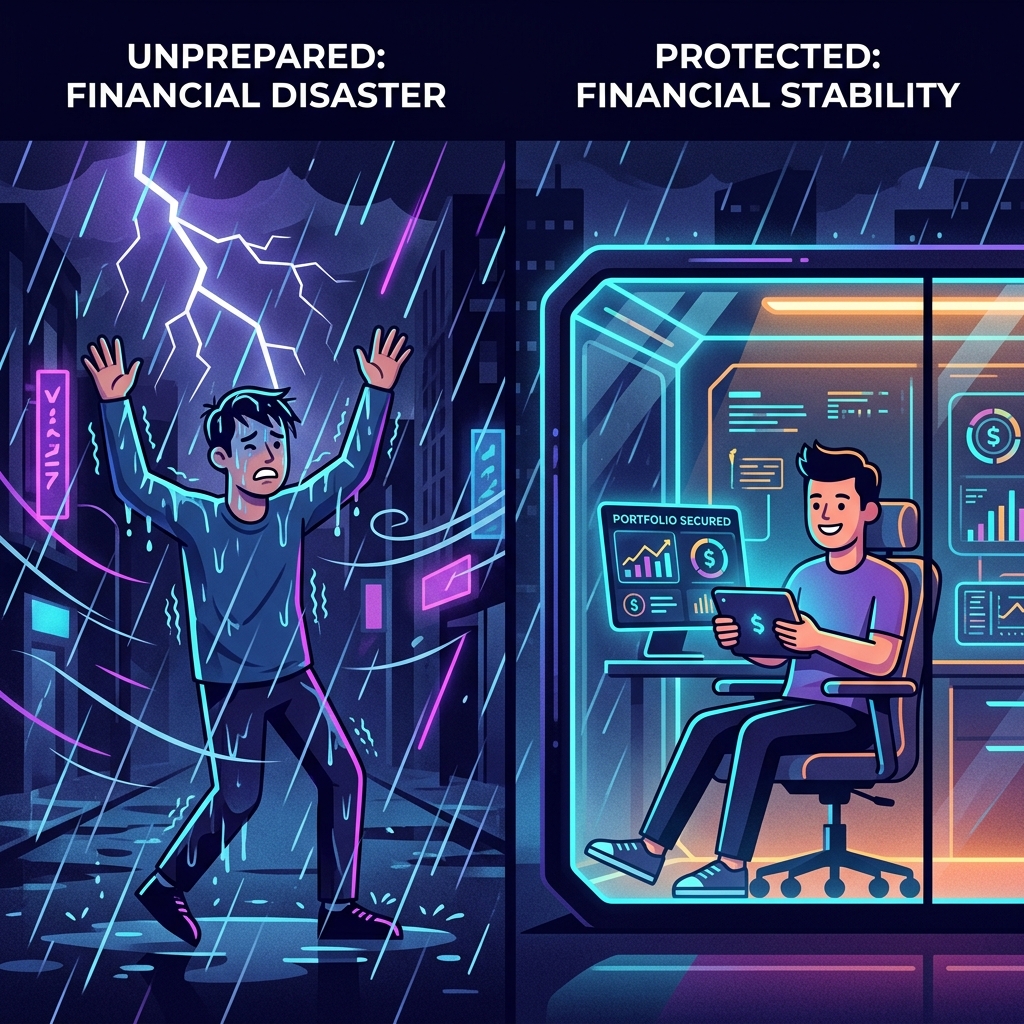
Meet John. John read a blog post that said he needed $10,000 as an emergency fund. He hit that number, stopped saving cash, and put everything else into the stock market. He felt invincible.
Then the storm hit. John was laid off. A week later, his car broke down requiring a $2,000 repair. Because he lost his employer healthcare, his medical premiums skyrocketed. His $10,000 vanished in 45 days. John was forced to sell his investments at a massive loss just to survive.
The New Reality of Financial Disasters
For decades, financial advisors preached the "3 months of expenses" rule. It sounded simple and safe. In today's economy, it is a recipe for disaster. Finding a new high-paying job in a competitive market now averages 5 to 7 months.
When the storm hits, you want to be sitting in a high-tech glass bunker, completely unaffected by the chaos outside. That requires a 6-month buffer.
The 6-Month Bare Bones Rule
Your emergency fund needs to cover exactly 6 months of Burn Rate. Burn rate does not include your Netflix subscription, your vacation fund, or your daily takeout.
Burn Rate is the absolute minimum you need to survive without defaulting on loans or going hungry:
- Rent or Mortgage
- Mandatory EMIs (Car, Student Loans)
- Basic Utilities (Electricity, Internet, Water)
- Groceries
Stop Guessing, Start Calculating
If you don't know your exact monthly Burn Rate down to the dollar, you cannot calculate your emergency fund requirement. Most people overestimate how much cash they need (and miss out on investing returns) or drastically underestimate it (and risk bankruptcy).
Calculate Your Exact Emergency Coverage
Enter your liquid assets and monthly expenses into our free True Wealth Score tool to instantly see exactly how many months of coverage you actually have.
Calculate My Coverage